The Bookworm and the Bookmark
You're going to bookmark this. The save is the cheapest promise you can make. Finishing is the expensive one.
You're going to bookmark this.
You will want to save it and come back later.
That is the joke.
Tell me if any of these sound like you:
1) You feel like you've been lied to about what a finished life looks like.
You're collecting a version of yourself that sounds impressive when you mention it at dinner. Threads. Essays. People worth knowing. A life that would not make anyone think you waste your time. And you do not see it going anywhere.
If you ignore that feeling, you wake up five years later with a degree of taste, a decent job, and a never-ending sense that you will never sit with any of it.
2) You're productive, but not actually finishing anything.
You wake up early. You listen to podcasts. You journal, you lift, your calendar is full, but the pile of things you meant to return to does not move.
Give it five years and you'll still be "getting organized."
3) You want a unique life, but you water the goal down so nobody laughs.
You do not want to be the person who never finishes. But when people ask about your weekend, you say you'll catch up on Sunday, because actually finishing in one sitting sounds embarrassing.
You get stuck performing the start. You feel special for wanting to finish, but you still act the same way as everyone else.
Nobody wants to end up in any of those 3 situations.
This letter will change that for you.
Because one of my favorite things to do is study people who finish and people who keep collecting. Finishing is doing more of the first and less of the second.
This will be comprehensive.
There is a pattern in the people who actually finish. I did not expect it. You will not like the first picture.
Their goal is delusional.
That's the key to actually finishing.
All I ask is that you give this your full attention. Let's begin.
Why a "realistic" pile leads to failure and mediocrity (you fall into this category by default)
You have a goal, even if you didn't set it. Every move is aiming toward a goal you never chose, or a room chose for you. Like a heat-seeking missile.
Take a second and think about that.
Every single move is toward a goal.
That's important. Extremely important. It means that if you don't know what those goals are, you are not in control of the pile.
Here's how it goes:
You are born.
Your first goal is not missing what serious people keep.
The room "wants the best for you."
It teaches you to start, then what a serious person collects: more, tagged, a number that grows.
You hit the boxes.
Then you wonder if this was even what you wanted.
The pile is not a failure of words. It is a successful project. "I'll do it later" is not a schedule. A new system to "get organized" is the same goal wearing a different coat.
Give it five years. Same folder. Better tags. Folders inside folders. You will call that taste. You will still not have sat with it. The lower part of you wants the number to grow. The higher part wants a way home. It feels like being ripped in half.
That is a signal. Not to install another app. To change the goal the pile is allowed to serve.
The reason realistic goals fail is how you choose them. You look at what you think is possible, a little this weekend, then water it down so people won't laugh. A goal only feels realistic if it fits the life your five closest friends already expected you to have.
In other words, your mind is in a cage. Stay in it and you'll never notice a sitting that would have changed the pile, until the pain is so great you either get crushed or pursue a delusional sitting anyway.
The cage does not feel like a cage. It feels like taste. It feels like being the kind of person who keeps the good ones. Sit with that.
You will not like this next picture. That is the point.
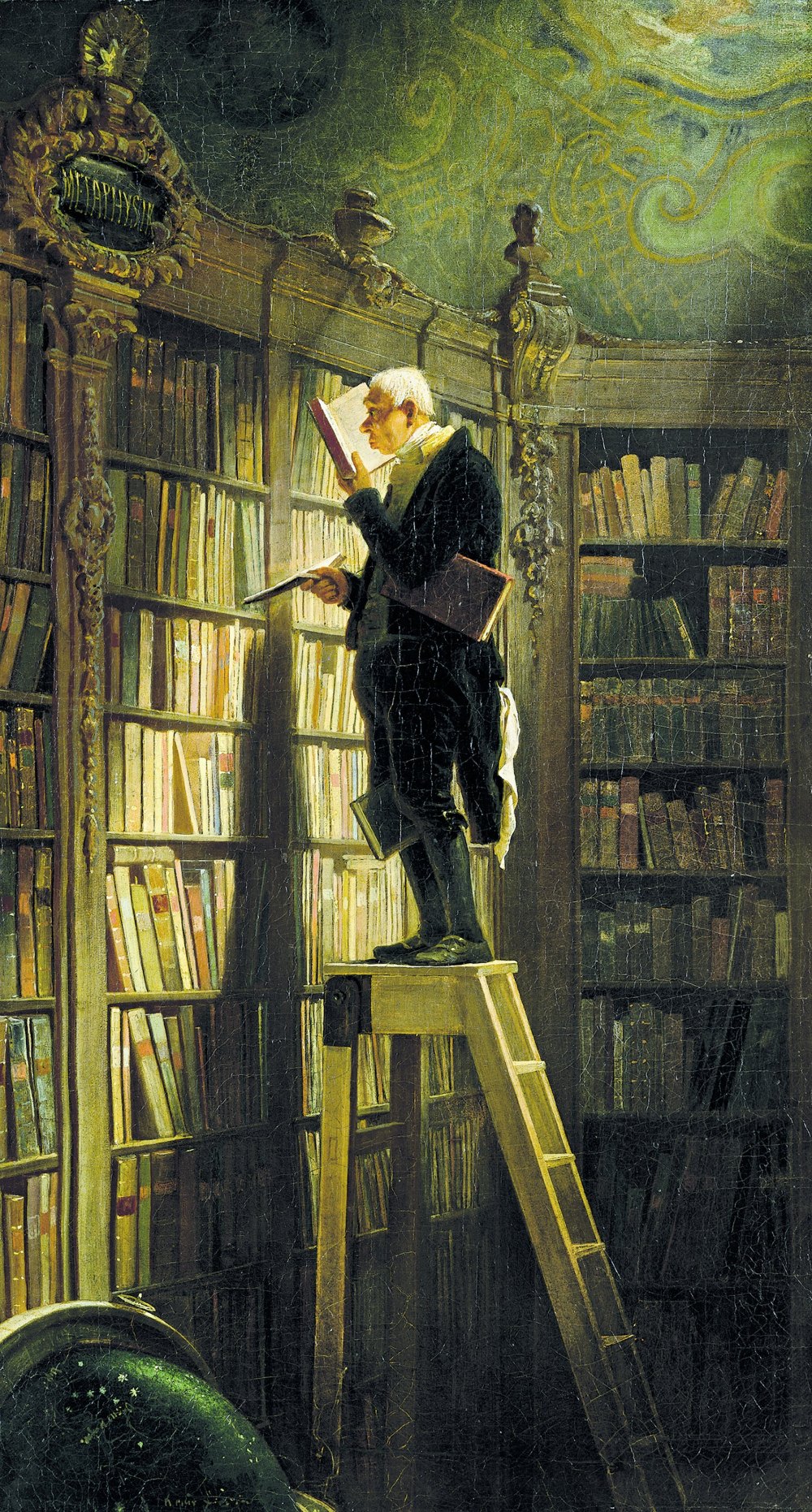
Figure 1. Four volumes. Four limbs. No fifth. This is what finishing looks like from the floor. Carl Spitzweg, The Bookworm, around 1850. Canvas, oil. Museum Georg Schäfer, Schweinfurt. Wikimedia Commons hosts a public-domain photograph.
Look at him.
He looks ridiculous. White hair, black coat, four books, no free hand, a globe he will not touch. Museum Georg Schäfer still has the canvas. Carl Spitzweg (1808-1885) painted it around 1850, and people have been laughing at the nerd on the ladder ever since.
Laugh. Then count the limbs.
Every one has an assignment. He cannot take a fifth volume without releasing one he already holds, and he cannot climb down without beginning that release. His body is the capacity limit.
That is not a joke about a nerd. That is a finished hour, painted. Four holds. No fifth. The ladder still has a floor.
Now look at your life and find the fifth volume. The extra tab. The thing you added because adding felt like work.
You do not have a body attached to the tap. So you never have to let go.
If someone says they want to "finally get through their saves," I often don't believe them. Not because they aren't capable, but because the same person will save three more during the conversation.
Do not take this next sentence lightly.
The tap is free. The sitting is not. That is not a motivation problem. That is selection pressure. Whatever became cheap will multiply. Whatever stayed expensive will starve. Save became cheap. Finishing became scarce.
You say you want to read more. The cheap act says otherwise.
Want to see the cage when it looks like a library?
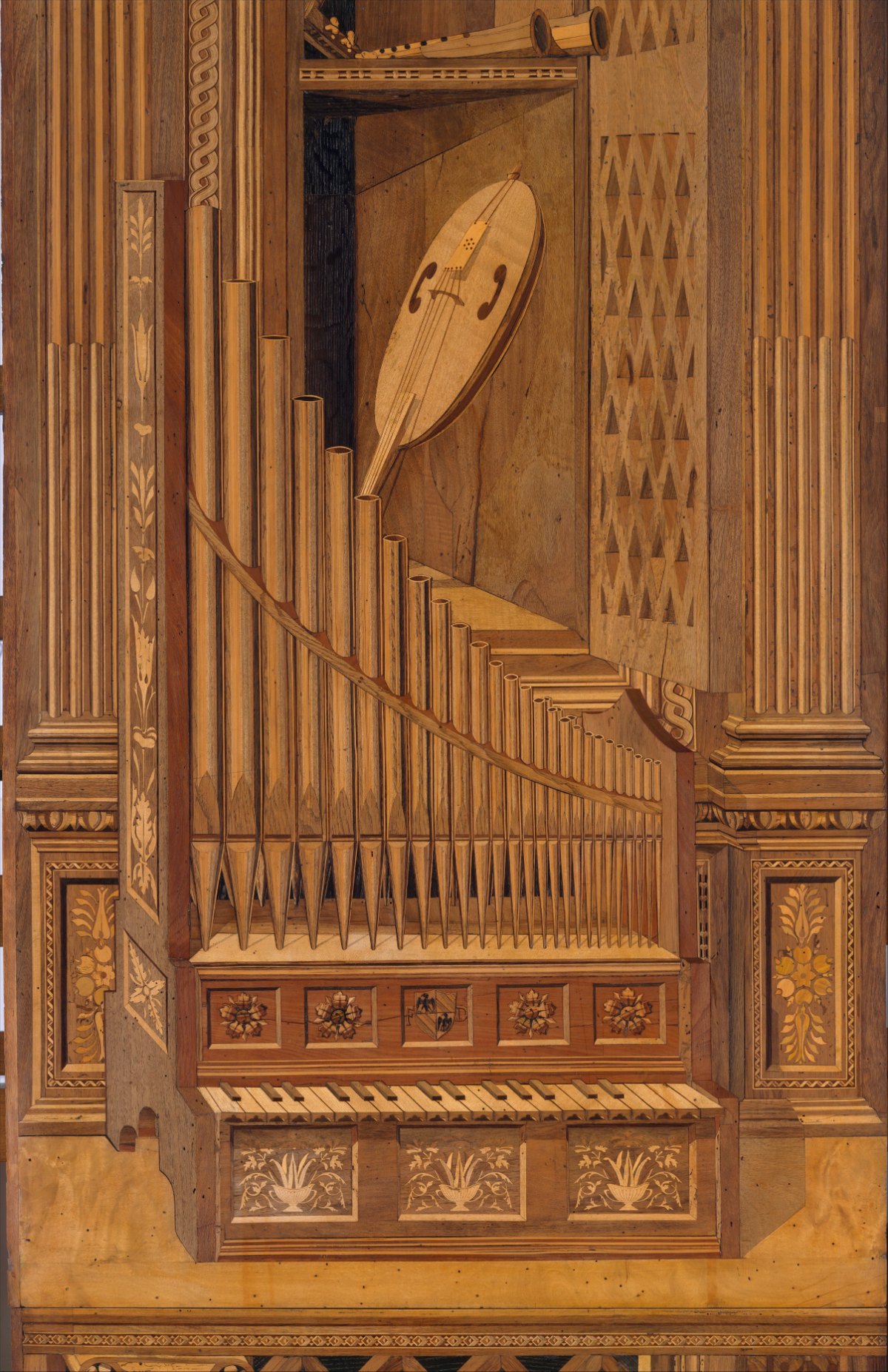
Figure 2. The wall remembers the lute. Nobody has to play it. Studiolo from the ducal palace at Gubbio, executed in the workshop of Giuliano da Maiano. The Metropolitan Museum of Art, New York; image released by the museum without restriction.
Find a book you can take off that wall.
You cannot. Every cupboard is a picture of a cupboard. The lute is wood glued into the shape of a lute. A pipe organ that will never make a sound. Federico da Montefeltro (1422-1482) paid for this around 1478 to 1482, a study for his palace at Gubbio, and New York's Metropolitan Museum of Art has shown the complete room since 1996. Thousands of pieces of wood performing an inventory. Zero playable instruments.
It looks like a library. Nothing comes off the wall.
That is the realistic pile. It looks like taste. It is furniture.
A new app to get organized is another cupboard painted on the same wall.
The psychology of a delusional sitting
Humans aren't unique because they have memory, or a more refined taste than the feed. They're unique because they constantly simulate the future to steer the present. You think more about the next save than the last unfinished one. That future causes the present tap. Not the reverse. You do not tap your way into a finished library. You install the finished library first, then act toward it.
It's called selective attention. Your brain either gets pulled by the feed or directed by a sitting. Focus on one page and, by definition, you're not focused on the rest. A delusional sitting forces this to happen.
Imagine two people in the same room. One has the same goal as almost everyone else: keep a decent folder, look well-read, never miss a thread. The other has a goal that seems impossible: inbox zero in one sitting.
Will the first ever finish more than a realistic weekend would allow? No. Their attention is not selecting for it. They could come across a sitting that would change the pile and their mind will consider it "too much." The second cannot think like the average saver. Most taps they're taking are completely useless.
That's the thing.
What would the second person even look at?
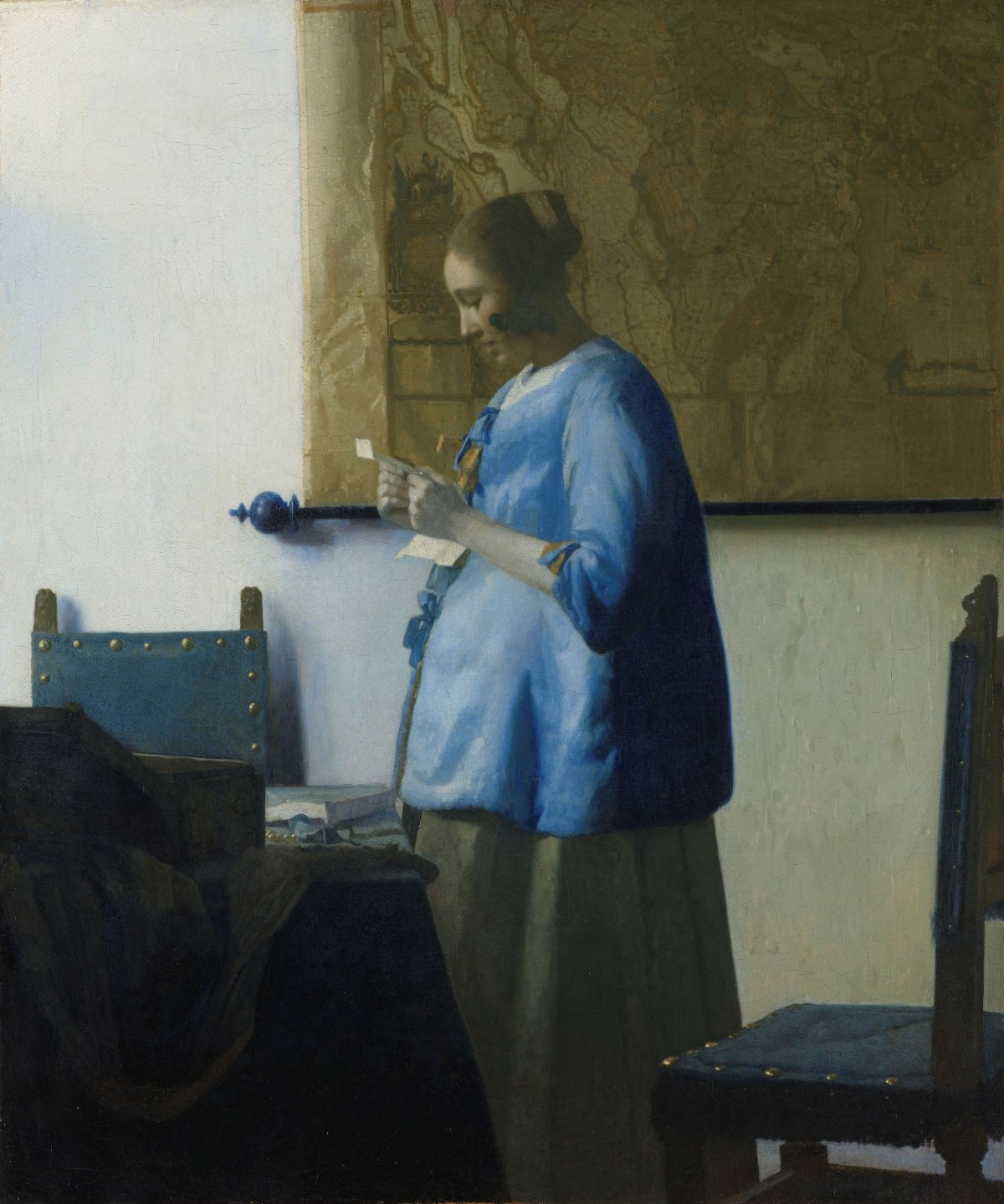
Figure 3. Both hands on one sheet. The map waits. It does not get a tap. Johannes Vermeer, Woman in Blue Reading a Letter, around 1663. Canvas, oil. Rijksmuseum, Amsterdam, City of Amsterdam loan. Wikimedia Commons hosts a public-domain photograph.
Both hands on one letter. A map of Holland she does not turn toward. Two empty chairs. Johannes Vermeer (1632-1675) painted this around 1663. The Rijksmuseum still has it.
She is not more disciplined than you. She is in a different reality. The letter is the sitting. The map is every tab that would have felt useful. Two people in that room would not see the same object as the job.
A goal is a filter. It decides what even counts as the page.
The filter has a door. Most people never find it because the tap never asks them to walk through one.
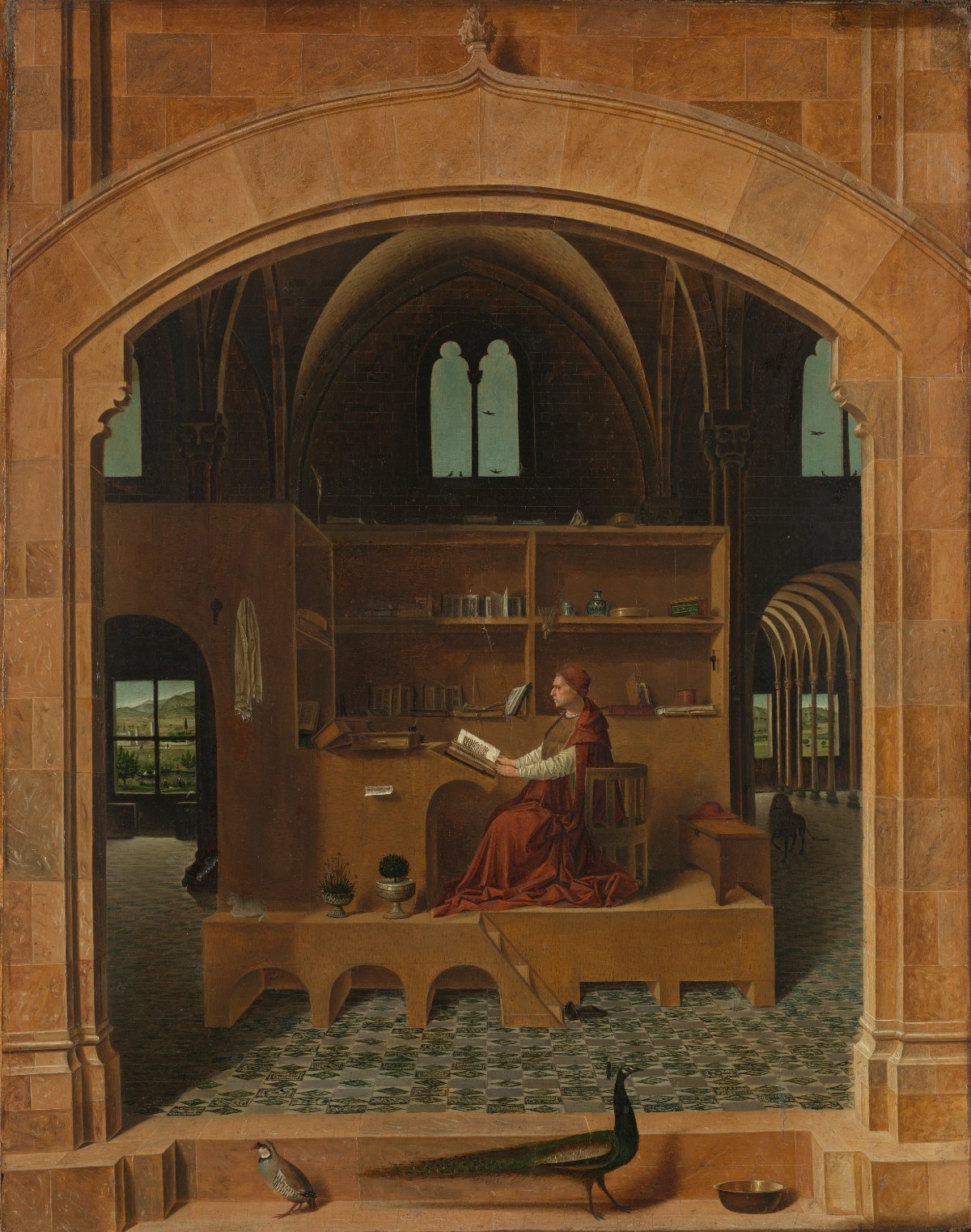
Figure 4. Three steps. Shoes on the tread. One book in both hands. Antonello da Messina, Saint Jerome in His Study, about 1475. Oil on panel. National Gallery, London. Public domain, via Wikimedia Commons.
Look at the shoes.
They sit together on the lowest tread, toes pointing away from the place he has entered. Antonello da Messina (around 1430-1479) painted this around 1475. The panel is at the National Gallery, London. Taking them off is how you arrive. Three steps. That is the whole protocol wearing leather.
The tab never asks you to take them off. That is why it feels like work without ever becoming one. There is no threshold, because there is no body attached to the click.
I can hear the objection. You've tried a sitting. None of this happened.
Yes.
Your goal needs gravity. So strong that another tap, another Sunday, looks pointless. Inbox zero in one hour. Not "get more organized."
A sitting without gravity is a mood. You sit down, you feel serious, you open a second tab for context, and the hour recruits itself back into the librarian. Write the end time before you open the folder. When the hour is gone, you stop. The library can stay closed.
How to enter the same reality as people who actually finish
Write these down before the next picture. The pictures after this are the trap. This is the way out.
Step 1) Install the point of view. Inbox zero. One hour. If your current approach can get you there, reject it and raise it. Twenty this weekend is linear. The goal must be singular and self-chosen. "Build a beautiful library" and "finish" split focus. It cannot come from the product, the dinner table, or the algorithm. The finished version is "I do this," and most of what you're tapping has nothing to do with it.
Welcome to the unknown.
2) Set standards for what you don't do. This is the hardest part. You do not tap during the sitting. You do not open another read-it-later. You do not water the hour down so it sounds reasonable.
The how can wait. Setting the sitting lets the mind find the how.
Your goal is not a destination you hit. That's the self-help reading. Hit inbox zero or not, you will land nearer than a realistic weekend ever allowed.
Now the trap. A military engineer put the library on a wheel so a gouty reader would never have to stand up.
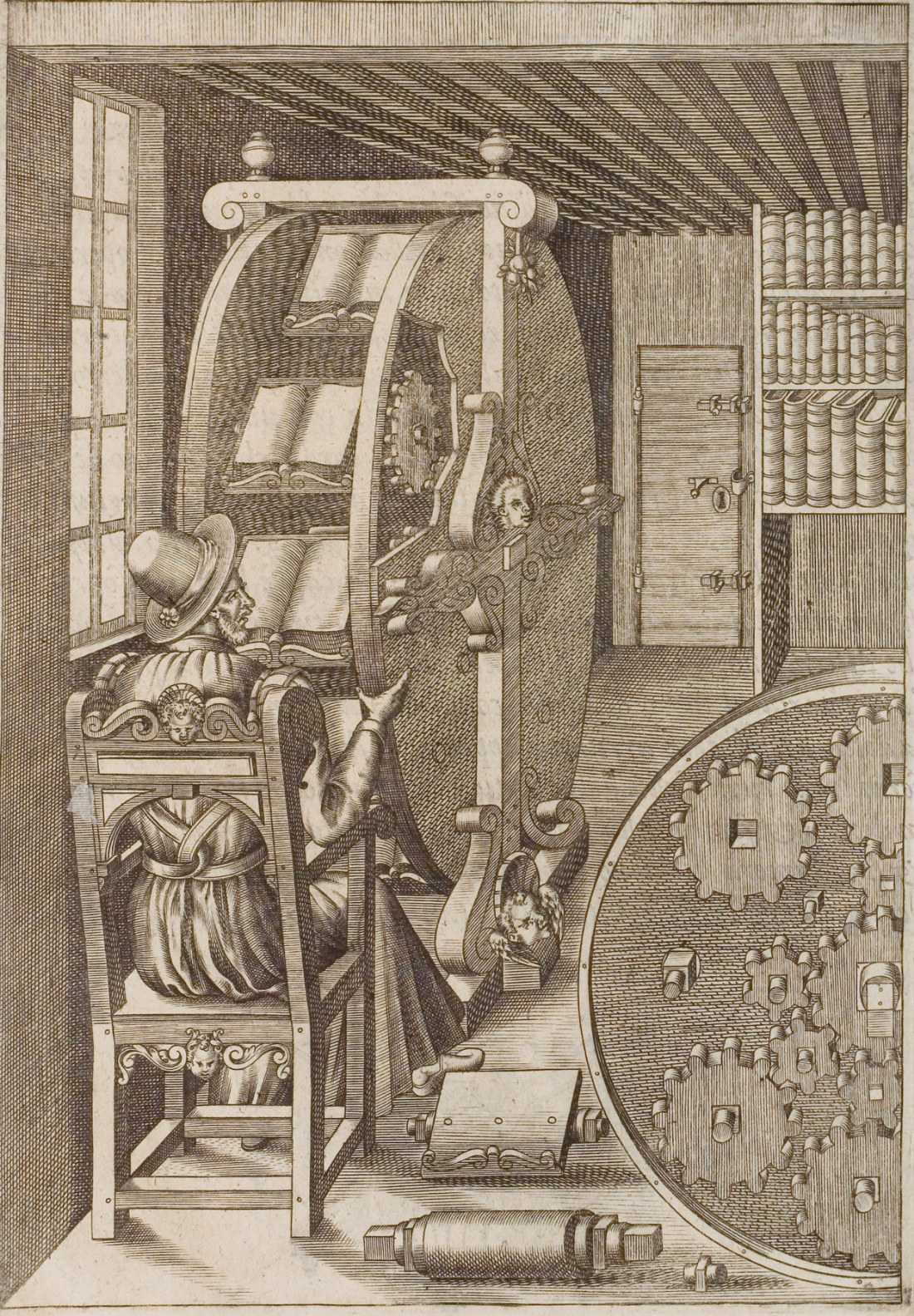
Figure 5. Twelve books stay level. One hand turns the library. You call it a tab. Agostino Ramelli, Le diverse et artificiose machine, Paris, 1588, figure 188. Engraving. Public domain, via Wikimedia Commons.
Guess what the wheel was for.
Not storing more. Making leaving cheap. Agostino Ramelli (1531-around 1610) published this as figure 188 in Paris in 1588. Twelve books stay level. One hand turns them. He recommended it especially for readers with gout: one seated person, many volumes, no walk to the shelves.
You have two working legs and you still live inside that invention. You just call it a tab.
Then you open your Bookmarks.
Someone borrowed a word that used to mean a way home and hung it on a list that never has to choose. The tap occupies no slot. The old save does not leave. That one-place goal still looks delusional in 2026. That is the point.
Want to see who stays if you never leave?
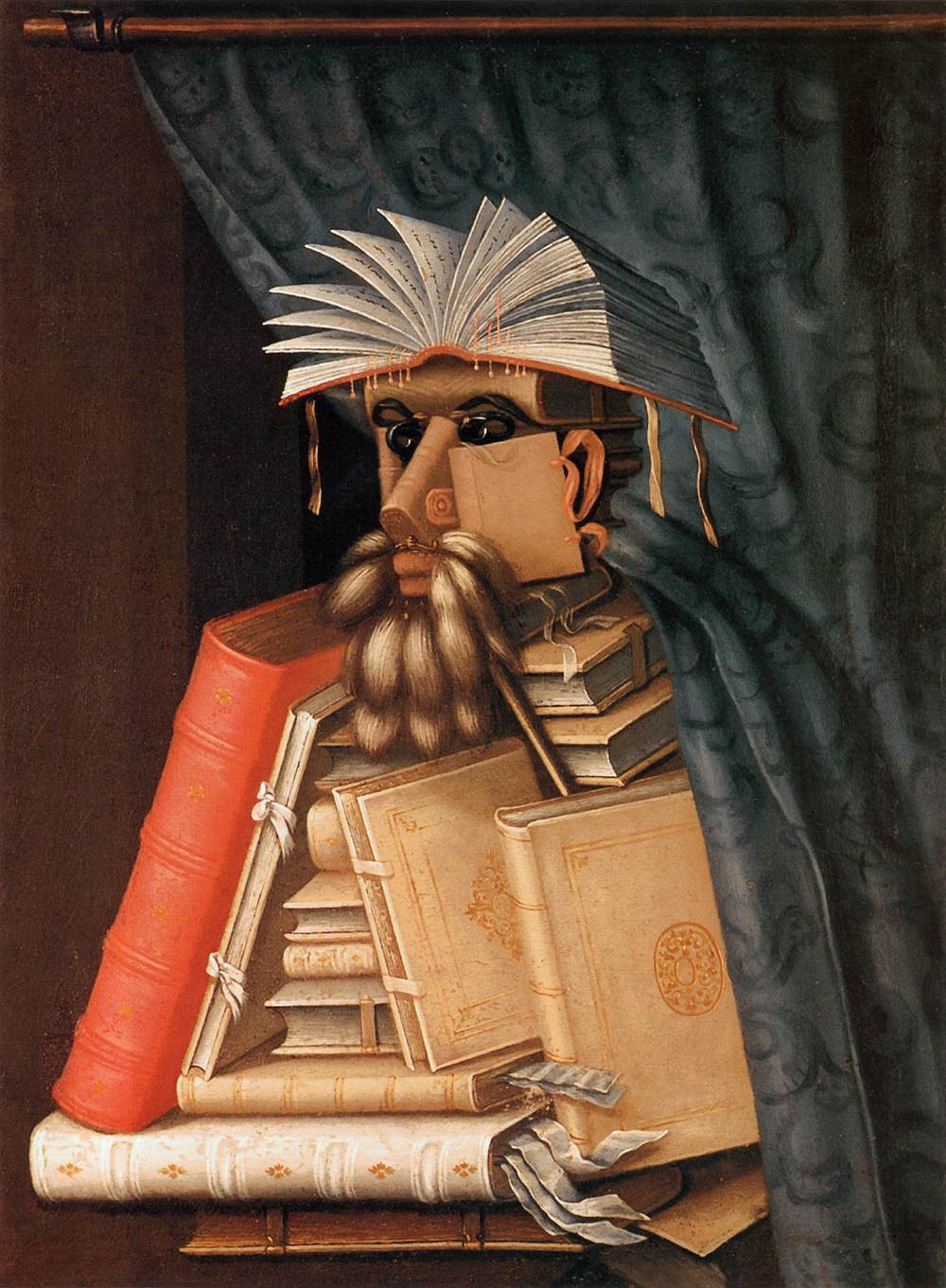
Figure 6. The collection supplies the person. Search the opening for skin. None. Giuseppe Arcimboldo, The Librarian, around 1570. Canvas, oil. Skokloster Castle, Sweden. Wikimedia Commons hosts a public-domain photograph.
Search the opening for skin.
None. An open volume for hair. Dusters for a beard. Folios for a chest. Paper slips where fingers should be. Giuseppe Arcimboldo (1526-1593) painted this around 1570. It hangs at Skokloster Castle in Sweden. Viewers have long read it as a jab at Wolfgang Lazius, a court historiographer rumored to borrow books faster than he returned them.
The marker has multiplied until no hand remains to move it. You think you are deleting posts. You are editing who you get to be if the folder gets small.
Want to see why your beautiful system never finishes the pile?
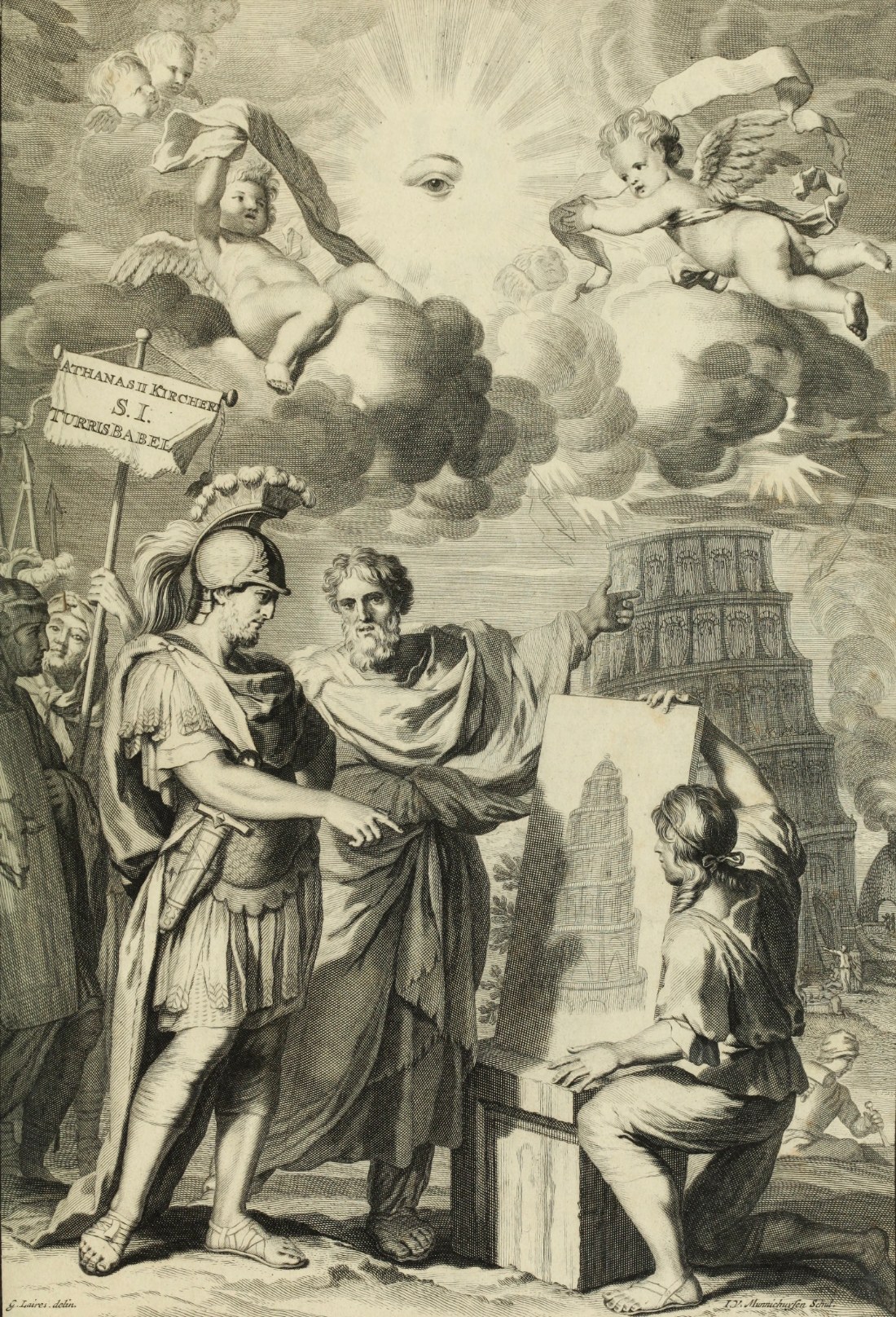
Figure 7. The drawing is finished. Look behind the king. Athanasius Kircher, Turris Babel, Amsterdam, 1679, frontispiece. Engraving. Public domain, via Wikimedia Commons.
Look behind the king.
A neat elevation. A kneeling draughtsman. Geometry finished enough to approve. Athanasius Kircher (1602-1680) published that frontispiece in Amsterdam in 1679. The drawing is the system you keep installing.
The real tower is open, smoking, unfinished. Tags, a prettier list, a new app: those are clean elevations. They do not climb down the ladder. They do not take the shoes off. They do not play the lute.
Step 3) Take the highest leverage path. You need four moves. No fifth. You may need an export, because the timeline stops returning older items somewhere around 800 to 1,000. has not published that range. You can keep receiving after you can no longer reach what you received.
Finishing is a decision that lets an item leave. For one hour you price entrance and exit the same. Each item must leave, or it must carry a date. Writing about the pile keeps the cheap act employed. Deciding fires it.
Open the folder. Oldest first if you can stand it, newest if that is the only way you will start. For each item, one of four moves. No fifth.
Done: you read it, or you already got what you needed. It leaves.
Snooze: not now, a date exists. A week is honest. "Someday" is a lie with a nicer coat.
Let go: you will not read it. That is a complete decision. It is not a moral failure.
Let go is the move the realistic sitting refuses. You will snooze it so you can still be the person who might read it. That is the cage wearing a date. If you will not read it this month, it is already gone. Name that.
Keep only if it is already in progress, the way a fourth volume is already in a knee. One or two of those. Not twenty. If you keep twenty, you are the scholar with a fifth volume and no knee left. You are back in the wheel.
At the end of the hour: how many left. Write the number. Not a vibe. A number.
If a save is past the retrieval ceiling, stop pretending you will find it by scrolling. Export what you can while the door is open. Take the file while the program is healthy.
The folder gets smaller because most of what you were doing had nothing to do with finishing.
That was not a lot.
Stick with me.
You turn the pile back into a bookmark.
A bookmark was never a museum. It was a way home.
The lute on the Gubbio wall still waits, and nobody has to play it. Antonello's shoes still wait on the step. Ramelli's wheel can still be left unturned. The scholar on Spitzweg's ladder can still climb down.
You can have that too. Not by becoming more disciplined than the list, but by refusing to live inside a machine that cannot finish.
The next save will try to recruit you back into the librarian. That's its job.
Your job is one question:
Where did I stop?
Sources
- Plates: Carl Spitzweg, The Bookworm, around 1850, Museum Georg Schäfer. Studiolo from the ducal palace at Gubbio, workshop of Giuliano da Maiano, Metropolitan Museum of Art, New York, shown complete since 1996. Johannes Vermeer, Woman in Blue Reading a Letter, around 1663, Rijksmuseum. Antonello da Messina, Saint Jerome in His Study, around 1475, National Gallery, London. Agostino Ramelli, Le diverse et artificiose machine, Paris, 1588, figure 188. Giuseppe Arcimboldo, The Librarian, around 1570, Skokloster, often read as a jab at Wolfgang Lazius. Athanasius Kircher, Turris Babel, Amsterdam, 1679. Public domain or museum-released without restriction, as credited on each plate.
- Observer-found retrieval ceiling around 800 to 1,000. X documents no limit. The official archive still omits the collection.